

The United States government is sitting on a massive financial windfall as its equity stake in Intel Corporation has nearly quadrupled in value. After a period of near-collapse characterized by sub-$20 share prices and mass layoffs, Intel has undergone a dramatic transformation over the last eight months.
Under a strategic pivot led by the Trump administration in late 2025, billions in federal grants were converted into a direct ownership stake, a move that is now paying off for American taxpayers as Intel’s stock price nears record highs.
The August 2025 Deal: From Grants to Equity
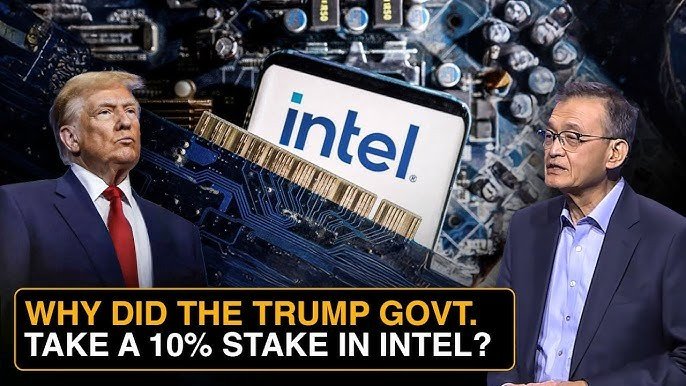
In August 2025, the U.S. government fundamentally changed its approach to supporting the struggling chipmaker. Rather than providing “no-strings-attached” subsidies, the administration negotiated a 9.9% equity stake in exchange for federal funding.
The Investment Breakdown:
- Total Stake: 433.3 million shares of Intel common stock.
- Purchase Price: $20.47 per share.
- Funding Sources: $5.7 billion from unused CHIPS Act grants and $3.2 billion from the Department of Defense’s Secure Enclave program.
- Total Investment Value at Purchase: Approximately $8.9 billion.
As of late April 2026, with Intel shares trading near $80.00, the value of this stake has climbed to over $34 billion, representing a gain of tens of billions of dollars for the federal government.
Intel’s 2026 Turnaround: Key Catalysts
The recovery follows a tumultuous 2025 where Intel faced stiff competition from Taiwan and South Korea and struggled with a $3 billion quarterly loss in its foundry business. Several key factors contributed to the current surge:
- Sub-2 Nanometer Breakthrough: In early 2026, Intel successfully launched its first sub-2nm CPU processor designed and manufactured entirely in the U.S.
- The “Secure Enclave” Success: Intel reaffirmed its role as the primary domestic provider of secure semiconductors for the Department of Defense.
- Strategic Partnerships: New alliances with companies like Nvidia, SoftBank, and a role in Tesla’s Terafab project have revitalized Intel’s foundry business.
- AI Inference Demand: A market shift from AI training to AI inference has led to a “booming demand” for Intel’s Xeon server processors.
The “New Deal” for Taxpayers
The Trump administration’s “Investment Accelerator” program shifted the focus of the CHIPS Act toward financial returns. By eliminating previous profit-sharing and clawback provisions in favor of direct equity and warrants, the government ensured that if the company succeeded, the taxpayers would share in the profit.
“We made a GREAT Deal, and so did Intel. Our Country is determined to bring leading-edge Chip Manufacturing back to America, and that is exactly what is happening!!!” — Donald Trump, April 2026.
Conclusion
Intel’s journey from the brink of collapse in 2024 to a high-performing “national champion” in 2026 marks a pivotal moment for U.S. industrial policy. While the company still faces challenges in manufacturing scale, the U.S. government’s quadrupled investment suggests that the strategy of “permanency of capital” and direct equity has turned a potential bailout into one of the most profitable government interventions in corporate history.